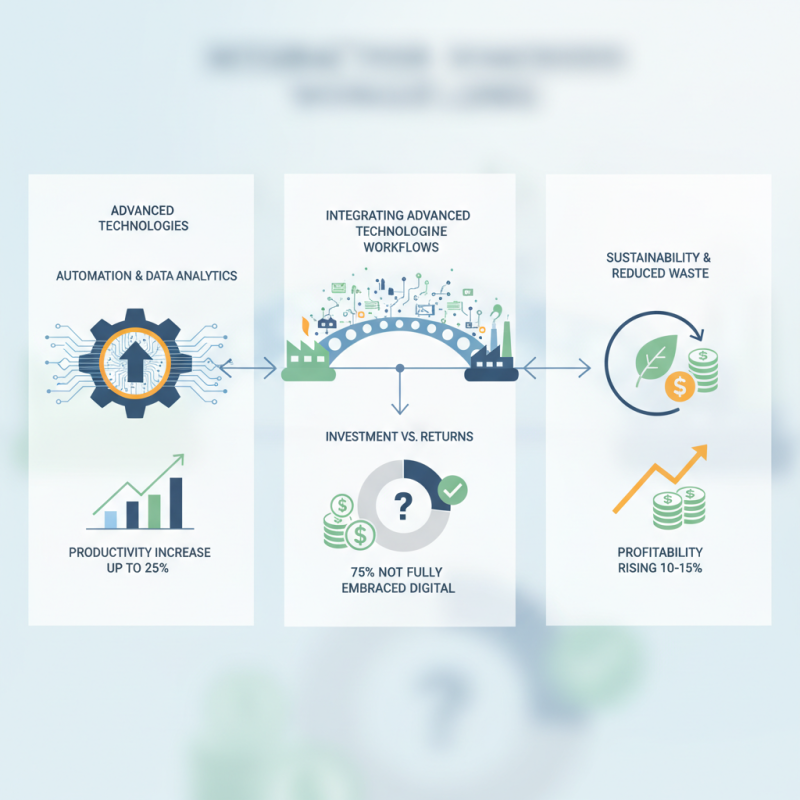
In today’s super competitive manufacturing world, mill works really stand out as a key factor in boosting efficiency. According to reports from the National Association of Manufacturers, companies that put effort into optimizing their mill processes could see productivity jumps of up to 25%. But it’s not just about upgrading machinery – it’s about bringing in cutting-edge tech to make workflows smoother. Things like automation and data analytics can seriously cut down on downtime and keep things moving.
That said, jumping into these new tech solutions isn’t exactly cheap. Lots of manufacturers struggle to justify those costs, especially when they’re unsure about seeing quick returns. McKinsey & Company points out that more than 75% of manufacturing firms haven’t fully embraced digital transformation yet. That’s a big missed opportunity for snagging some serious efficiency gains. So, these mills really need to figure out how to overcome these hurdles if they want to keep up.
Plus, we can’t forget about sustainability. Making mills more efficient also means less waste and better use of resources. Industry stats show that companies focusing on being eco-friendly could see profits climb by around 10-15% over time. But balancing efficiency with environmental responsibility? That’s no walk in the park. Manufacturers have to keep reassessing their strategies in mill works to stay ahead of the game and handle these tough challenges head-on.
Mill works play a crucial role in enhancing efficiency in modern manufacturing. These facilities are often home to complex machinery designed to process raw materials into usable products. The use of milling machines, saws, and lathes streamlines the manufacturing process. This reduces time and labor costs. Workers can focus on specific tasks, improving overall productivity.
One significant aspect is the automation in mill works. Automated systems allow for precise cuts and reductions. However, skilLED operators are still needed to oversee these systems. They ensure that all operations run smoothly. This balance between automation and human oversight is essential, though it can lead to errors if not managed properly. Training employees is critical to prevent such issues.
The efficiency gained from mill works can sometimes lead to complacency in processes. Companies might overlook maintenance schedules for machinery. Regular checks are necessary to avoid breakdowns. Investing in technology is vital, but human expertise cannot be replaced. Continuous learning and adaptation are key for sustained efficiency in manufacturing contexts.
Mill works play a vital role in enhancing efficiency within manufacturing processes. Various key technologies implemented in these facilities significantly boost productivity. For instance, automation systems reduce manual labor, leading to faster production times. According to a report by the International Federation of Robotics, the use of industrial robots can increase overall productivity by up to 30%.
Another essential technology is data analytics. Modern mills employ advanced software to analyze production data in real-time. This allows for immediate adjustments to workflows, optimizing resource allocation. A study by McKinsey & Company indicates that predictive analytics can improve manufacturing efficiency by 15% or more. Yet, the full potential of these technologies isn't always realized. Many establishments struggle with data integration, limiting their ability to make informed decisions.
Additionally, energy efficiency technologies, like variable frequency drives, contribute to lowering energy consumption. This shift can lead to significant cost savings, often around 20-30%. However, the initial implementation costs can hold back some companies. Balancing these investments with potential gains requires careful consideration. Despite the challenges, the continuous evolution of technology in mill works promises a more productive future for the manufacturing sector.
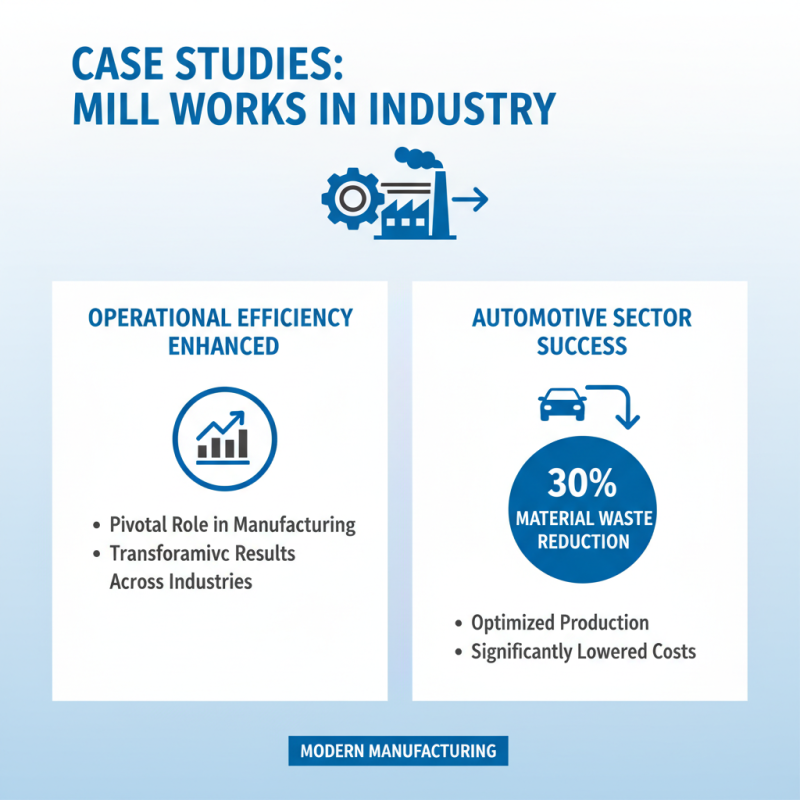
In the realm of modern manufacturing, mill works have played a pivotal role in enhancing operational efficiency. Case studies from various industries illustrate transformative results. One particularly notable instance occurred in the automotive sector, where the integration of a mill work solution reduced material waste by 30%. This shift not only optimized production but also lowered costs significantly.
Another case in the textile industry highlighted the swift adaptation of mill works. By employing advanced milling techniques, companies increased their output by 25%. Workers received training to manage these systems effectively, fostering a culture of continuous improvement. This move not only advanced technology but also empowered employees, showcasing the value of human expertise in an increasingly automated environment.
Tips for successful implementation include starting small. Testing solutions on a limited scale can help identify potential challenges. Involve your team early in the process. Their feedback is invaluable and can lead to smoother integration. Regularly review performance metrics to gauge improvement and adapt strategies as needed. Acknowledging that not every attempt will yield success can inspire creativity and resilience in your approach.
The efficiency of mill works in manufacturing processes has seen significant changes over time. Traditional mills primarily relied on manual labor and basic machinery. While these methods sufficed for some, they often led to inconsistencies in production. Workers faced limitations in speed and precision. The variability in raw materials also contributed to uneven output quality. Many manufacturers struggled with keeping up with market demand due to these inefficiencies.
In contrast, advanced mill works leverage technology to optimize production. Automated systems allow for continuous operation with minimal human intervention. This automation reduces errors and improves product quality. Real-time monitoring ensures that any issues are quickly addressed, significantly cutting down downtime. However, the initial costs of implementing advanced systems can be daunting for smaller manufacturers. They may find it challenging to justify this investment without clear, immediate benefits.
The shift toward advanced technologies poses its own set of challenges. There is a learning curve for operators unfamiliar with sophisticated systems. Additionally, reliance on technology can sometimes lead to overconfidence. This can result in neglecting basic maintenance or quality checks. Balancing traditional expertise with modern tools remains a critical consideration for many manufacturers seeking to enhance efficiency.
Mill works play a crucial role in enhancing efficiency within manufacturing processes. By optimizing resource usage, these systems minimize waste and boost productivity. Efficient mill operations ensure that raw materials are transformed into finished products with minimal energy expenditure. This not only lowers production costs but also reduces environmental impact.
One significant aspect of mill works is their ability to recycle materials. Many mills incorporate technologies that repurpose scraps and by-products. This practice not only conserves resources but also creates additional revenue streams. However, implementing these systems requires careful planning. Factories must balance the initial investment against long-term savings.
Despite these benefits, some challenges remain. Not all mills are equipped with cutting-edge technology. Older systems may struggle to adapt, leading to inefficiencies. Regular maintenance and upgrades are necessary to maintain optimal performance. Ultimately, the journey towards maximizing resource optimization in manufacturing is ongoing, demanding continuous reflection and adjustment.
In recent years, mill works have become crucial in optimizing manufacturing processes. Statistical analysis reveals that integrating milling technologies can boost output by an average of 25%. Industry reports indicate that factories using advanced milling techniques report a 30% reduction in waste. This efficiency not only impacts production speed but also enhances overall product quality, leading to higher customer satisfaction.
However, not all mills operate at peak efficiency. Some facilities struggle with outdated equipment or insufficient training. A survey found that 40% of workers felt they lacked proper knowledge of new technologies. Addressing these gaps is essential. Regular training programs can improve workers' skills, leading to better utilization of mill capabilities. The disparity in performance highlights the need for ongoing assessments and adjustments.
Data from the American Society of Mechanical Engineers shows that optimized mills can lead to energy savings of up to 20%. Yet, many manufacturers overlook the importance of maintenance. Regular upkeep can prevent breakdowns and ensure consistent output. Reflecting on these aspects can lead to more informed decisions that enhance manufacturing efficiency.
| Mill Type | Output Before Integration (units/month) | Output After Integration (units/month) | Percentage Increase (%) | Efficiency Improvement (%) |
|---|---|---|---|---|
| Vertical Mill | 1,200 | 1,500 | 25 | 20 |
| Horizontal Mill | 800 | 1,100 | 37.5 | 30 |
| Roller Mill | 1,000 | 1,300 | 30 | 25 |
| Disc Mill | 900 | 1,200 | 33.3 | 28 |
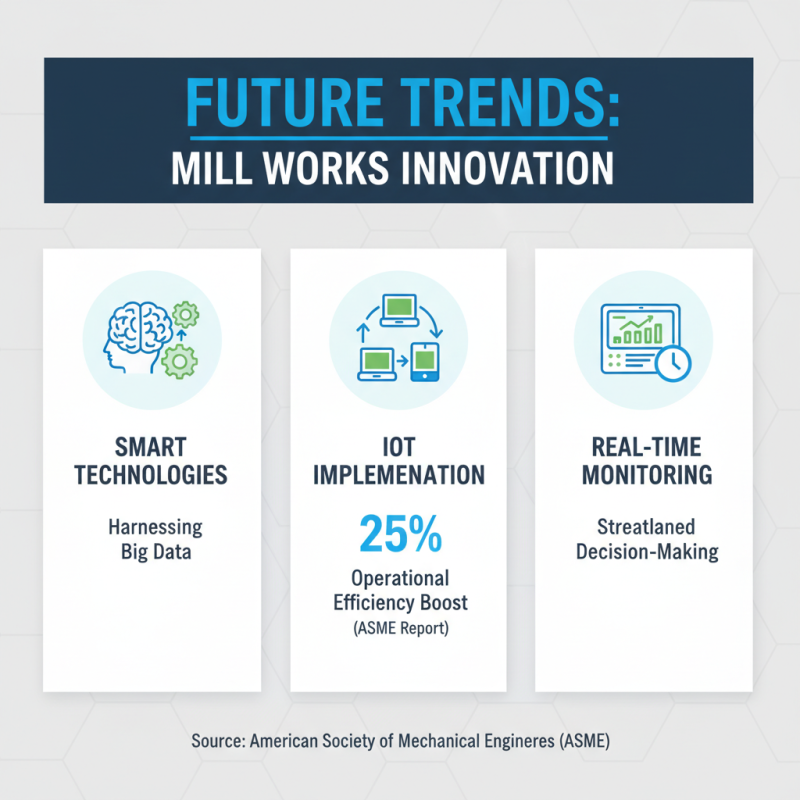
The future of mill works is being reshaped by groundbreaking innovations. Smart technologies are now enabling mills to harness big data. According to a recent report by the American Society of Mechanical Engineers (ASME), implementing IoT can boost operational efficiency by up to 25%. These systems monitor real-time data and streamline decision-making processes.
Automation is another key player. New robotic processes enhance manufacturing productivity, reducing labor costs significantly. A study published in the Journal of Manufacturing Science and Engineering shows that fully automated mills can operate 24/7, increasing output by as much as 40%. However, this shift raises concerns over workforce displacement. While jobs may decline, new roles in technology and data analysis will emerge.
Sustainability trends are also critical. Many mills are investing in renewable energy sources. The Global Energy Monitor highlights that mills utilizing solar and wind can save 30% on energy costs. These advancements contribute to a more sustainable future but bring challenges in implementation and adaptation. Industry leaders must carefully navigate these transitions to maintain a competitive edge.
: Mill works enhance efficiency by processing raw materials into usable products through complex machinery.
Automation allows for precise operations, but skilled operators are still needed to oversee the systems and prevent errors.
Improved efficiency can lead to complacency, causing companies to neglect maintenance schedules for essential machinery.
Utilizing predictive analytics in mill works can enhance manufacturing efficiency, although integration challenges often limit its effectiveness.
Industrial robots can boost overall productivity by up to 30%, helping reduce manual labor in production processes.
Initial implementation costs can be high, so weighing potential savings against investment is crucial for decision-making.
The automotive sector reduced material waste by 30%, optimizing production and cutting costs significantly through mill work solutions.
Training helps workers manage advanced systems effectively, fostering a culture of continuous improvement despite automation.
Start small with limited testing and involve your team early for valuable feedback throughout the integration process.
Regular reviews allow companies to gauge improvements, adapt strategies, and acknowledge that not every attempt will succeed.
Mill works play a crucial role in enhancing efficiency within modern manufacturing processes. By integrating advanced technologies, such as automation and real-time data analytics, mill works significantly boost productivity, leading to streamlined operations. The comparison between traditional and advanced mill works showcases notable improvements in output, resource optimization, and waste reduction, highlighting their transformative impact on industry practices.
Case studies demonstrate successful implementations of mill works across various sectors, revealing tangible benefits in efficiency and production rates. Statistical analyses indicate marked increases in output following the integration of mill works, underscoring their importance in contemporary manufacturing. As industries continue to evolve, future trends suggest further innovations that will shape the next generation of mill works, potentially redefining manufacturing standards and efficiency benchmarks.